Brian Clough
Manager • 1975–1993 • With Peter Taylor 1976–1982
Brian Clough did not simply become Forest’s greatest manager; he changed the scale of what the club believed was possible. He arrived in January 1975 with Forest in the Second Division and, after Peter Taylor joined him the following year, built one of the most extraordinary sides English football has seen.
Promotion came in 1977, followed immediately by the First Division title and League Cup. Forest then won the European Cup in 1979 and retained it in 1980. More League Cups, the European Super Cup and repeated Wembley appearances followed, keeping Forest among the leading clubs long after that first explosion of success.
Taylor’s role was fundamental. His eye for players and understanding of what Clough needed helped turn good footballers into the right footballers. Their partnership ended in 1982, but Clough remained until 1993, completing an 18-year reign that permanently changed Forest.
[heading]Did you know?[/heading]
Clough had little interest in long tactical lectures. Former players recalled that his team talks could last barely a minute, while Frank Sinatra or the Ink Spots played in the dressing room. On one occasion he simply put a football on the physio’s couch and told the players it was their best friend for the afternoon — they should caress it and look after it.

Harry Radford
Secretary-manager • 1889–1897
Radford was effectively Forest’s first manager, although the job was then known as secretary-manager. His period in charge came when organised league football was still being established.
Forest initially played in the Football Alliance, a short-lived national league for leading clubs outside the Football League. They won it in 1891/92 and entered the Football League First Division the following season.
[heading]Did you know?[/heading]
Forest had applied to join the Football League a year earlier and were turned down. They responded by winning the Football Alliance the following season before finally being admitted to the League.
Harry Hallam
Manager • 1897–1909
Hallam followed Radford and quickly delivered the first major trophy in Forest history.
In 1898, Forest beat Derby County 3–1 at Crystal Palace to win the FA Cup. Hallam remained in charge for more than a decade, overseeing an era in which Forest were already travelling widely and establishing an identity far beyond Nottingham.
[heading]Did you know?[/heading]
Hallam was in charge when Forest toured Argentina and Uruguay in 1905. Forest’s red shirts made such an impression that Independiente later adopted red themselves — a colour they still wear today.

Billy Walker
Manager • 1939–1960
Walker’s extraordinary 21-year spell covered wartime football, relegation, rebuilding and eventually Wembley glory.
Forest fell into the Third Division South after the war but recovered under Walker, winning promotion in 1951 and eventually returning to the First Division. The high point came in 1959 when Forest beat Luton Town 2–1 at Wembley to win the FA Cup.
[heading]Did you know?[/heading]
Walker already knew what it felt like to win the FA Cup as a manager. He had lifted it with Sheffield Wednesday in 1935, meaning his two FA Cup triumphs as a manager came 24 years apart.

Johnny Carey
Manager • 1963–1968
Carey produced the outstanding Forest side of the 1960s.
The peak came in 1966/67, when Forest finished runners-up in the First Division and reached the FA Cup semi-final. Until Clough’s championship side arrived a decade later, it was the closest Forest had come to becoming champions of England.
Carey’s team played attractive football and briefly looked capable of challenging for both league and cup.
[heading]Did you know?[/heading]
Carey had been one of Matt Busby’s great Manchester United captains, and Busby continued advising him after he became a manager. Carey’s son later recalled that Busby told his father to choose clubs where the directors would let the manager manage.
Dave Mackay
Manager • 1972–1973
Mackay’s Forest spell was brief and came during a difficult Second Division period.
He took over in 1972 but left the following year, becoming one of the links in the strange managerial chain that eventually led to Brian Clough arriving at the City Ground.
[heading]Did you know?[/heading]
Mackay left Forest for Derby County and then led Derby to the First Division title in 1974/75. Shortly afterwards Forest appointed Brian Clough — the man who had previously built Derby’s first championship-winning side.
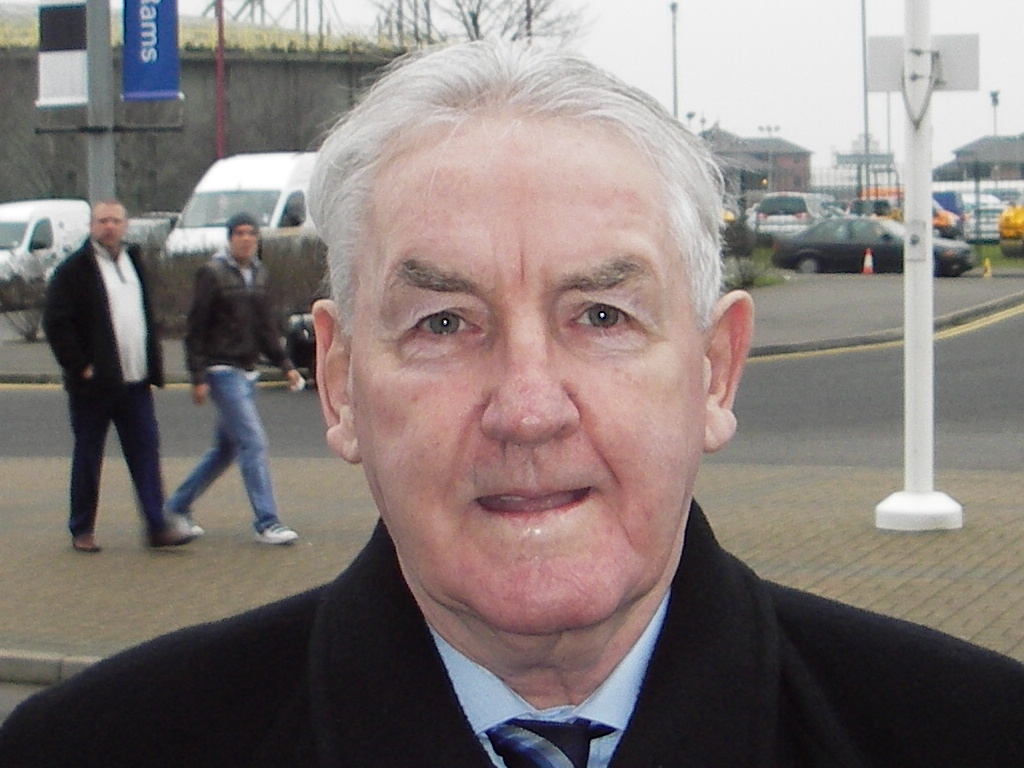
Frank Clark
Manager • 1993–1996
Following Brian Clough looked like an impossible job, but Clark handled it remarkably well.
Forest won promotion at the first attempt, then finished third in the Premier League in 1994/95. That brought European football back to the City Ground, and the following season Forest reached the UEFA Cup quarter-finals.
Clark understood the club particularly well because he had already lived through its greatest years as a player.
[heading]Did you know?[/heading]
Clark’s first meeting with Clough as a player was pure Clough. Clark hoped discussions about joining Forest might include a lucrative contract. Instead, Clough told him there were two reasons he wanted him: Forest didn’t have a left-back — and Clark was cheap.
Dave Bassett
Manager • 1997–1999
Bassett took over following relegation in 1997 and immediately delivered promotion.
His Forest side won the First Division in 1997/98, with an attacking team built around players such as Pierre van Hooijdonk and Kevin Campbell. Forest were back in the Premier League at the first attempt.
The following season went badly wrong, however, and Bassett departed in January with another relegation looming.
[heading]Did you know?[/heading]
Bassett has long been known throughout football as “Harry” Bassett, despite his first name being David. The nickname followed him throughout his playing and managerial career.
David Platt
Manager • 1999–2001
Platt arrived after relegation carrying the prestige of a distinguished England career and considerable freedom to reshape the squad.
The promised revival never materialised. Forest finished 14th and then 11th in the second tier, while expensive recruitment produced little lasting value. His spell remains one of the most heavily criticised periods of Forest’s long exile from the Premier League.
[heading]Did you know?[/heading]
Platt had supposedly retired as a player before becoming Forest manager. Then he walked into the dressing room, saw a spare number 7 shirt lying around and could not resist putting it on. He ended up becoming a player-manager after all.
Platt later admitted that the Forest job damaged his managerial reputation so badly that one chairman told him his CV was excellent — but his record at Forest was enough to rule him out of an interview.

Paul Hart
Manager • 2001–2004
Hart inherited a club in serious financial trouble and increasingly had to rely on young players rather than expensive signings.
Against that background, the 2002/03 side became one of the most entertaining Forest teams of the Championship years. They reached the play-offs before losing a dramatic semi-final against Sheffield United.
Many supporters believed Hart had restored something recognisably Forest to the football being played at the City Ground.
[heading]Did you know?[/heading]
Hart was known as an intense character long before taking charge at Forest. He later admitted management could feel like having “a fight every day”, while former colleagues remembered his explosive temper — including an occasion at Chesterfield when he punched through a dressing-room door.

Joe Kinnear
Manager • 2004
Kinnear initially appeared to have rescued a team heading for trouble.
He arrived with Forest 22nd in the First Division and produced an immediate recovery, eventually finishing safely in mid-table. The improvement disappeared during the following campaign and Kinnear resigned in December with Forest back near the bottom.
[heading]Did you know?[/heading]
Kinnear had one of football’s most unusual coaching backgrounds. Before returning to British management, he spent years working abroad, including spells in the United Arab Emirates and as national coach of both India and Nepal.
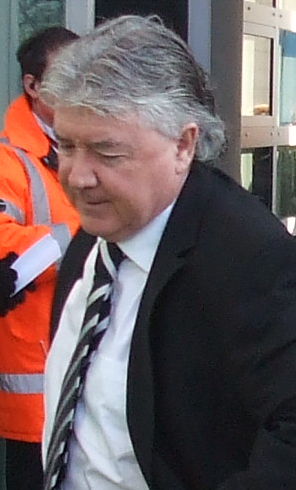
Gary Megson
Manager • 2005–2006
Megson arrived in the middle of a relegation battle and could not prevent Forest dropping into League One.
The following season was expected to produce an immediate promotion challenge, but results and the atmosphere deteriorated. He left in February 2006 with Forest 13th in the third tier.
It remains one of the bleakest points of the club’s modern history.
[heading]Did you know?[/heading]
Megson’s relationship with Forest actually began as a player under Brian Clough. Clough signed him from Sheffield Wednesday in 1984, never gave him a first-team appearance and sold him only months later. Megson later recalled Clough’s brutal assessment that he “couldn’t trap a bag of sand”.
Colin Calderwood
Manager • 2006–2008
Calderwood was given a clear task: get Forest out of League One.
His first attempt ended painfully in the play-offs, but Forest recovered and finished second in 2007/08 to return automatically to the Championship.
The football was not always loved, but Calderwood ultimately accomplished the job he had been hired to do.
[heading]Did you know?[/heading]
Calderwood and Clough never actually met, but their paths crossed when Calderwood was a teenage defender with Mansfield. Clough spotted him during a youth match at Forest’s training ground and reportedly wondered aloud whether the youngster was as brave tackling from the front as he was coming in from behind. Years later, Calderwood ended up sitting in Clough’s old office as Forest manager.
Billy Davies
Manager • 2009–2011, 2013–2014
Few Forest managers have divided supporters quite like Billy Davies.
His first spell undeniably made Forest competitive again. They reached the Championship play-offs in consecutive seasons and, for periods, looked capable of finally ending the Premier League exile.
Davies returned in 2013, but the second spell became increasingly fractious and ended after a 5–0 defeat at Derby.
[heading]Did you know?[/heading]
Davies knew many Forest supporters did not want a former Derby manager when he arrived. He said he actually kept letters condemning his appointment — and later began receiving letters from supporters telling him how much they enjoyed watching his team.

Steve Cooper
Manager • 2021–2023
Cooper inherited Forest near the bottom of the Championship in September 2021 and changed the entire mood around the club.
Within eight months Forest were at Wembley. Victory over Huddersfield ended a 23-year absence from the Premier League, and Cooper then kept the club up during its first season back despite an enormous turnover of players.
His relationship with supporters became unusually strong. Forest had endured years of managers coming and going; Cooper made the club feel united again.
[heading]Did you know?[/heading]
After victories, Cooper developed a ritual of walking towards the Forest support and punching the air three times. By the time Forest won promotion at Wembley it had become so recognisable that supporters were carrying cardboard cut-outs of Cooper around the celebrations.
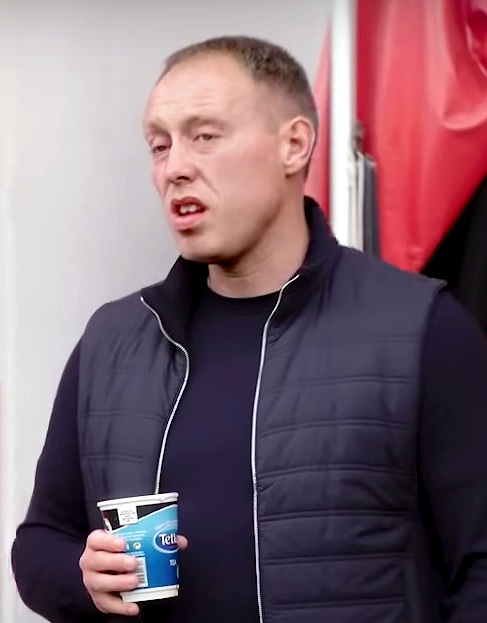
Nuno Espírito Santo
Manager • 2023–2025
Nuno arrived with the straightforward task of keeping Forest in the Premier League. Within little more than a year, expectations had changed completely.
The 2024/25 side became one of the surprises of English football, spending much of the campaign around the Champions League places, reaching the FA Cup semi-final and securing Forest’s return to European competition.
His calm manner was a sharp contrast with some of the more theatrical figures in the club’s managerial past, but the organisation and unity of his team were unmistakable.
[heading]Did you know?[/heading]
Away from football, Nuno has spoken about music and horses as two of the ways he switches off from the pressure of management — fitting for a manager whose public manner at Forest was generally calm and understated.

Vítor Pereira
Manager • 2026
Pereira’s Forest tenure lasted only a few months, but it gave the club a European adventure worthy of inclusion in its managerial story.
He arrived in February 2026 during an extraordinarily turbulent season and took Forest all the way to the Europa League semi-finals. For supporters who had grown up hearing stories about Forest in Europe, it gave the modern generation a continental run of its own.
Pereira spoke openly about understanding the weight of that history rather than trying to escape it.
[heading]Did you know?[/heading]
Before the Europa League semi-final, Pereira went into Nottingham and stopped at the Brian Clough statue. He later said he remembered Forest as one of Europe’s strongest clubs when he was growing up and that seeing Clough’s statue helped him appreciate what the European run meant to supporters.