1865 — The Beginning
Nottingham Forest were founded in 1865, making them one of the oldest professional football clubs in England. The club grew out of a group connected with shinny, a game similar to hockey, before football became the focus.
The red shirts were there from the beginning, inspired by Giuseppe Garibaldi’s redshirts — the origin of the club’s long-standing Garibaldi identity. By the end of the nineteenth century, Forest had established themselves nationally and were about to win their first major trophy.
[heading]Did you know?[/heading]
Forest’s red shirts helped inspire the colours of one of Argentina’s biggest clubs. After seeing Forest during their 1905 tour of Argentina, Independiente abandoned blue and white and adopted red — and have worn it ever since.

1898 — First FA Cup
Forest’s first major honour came in 1898, when they beat Derby County 3–1 in the FA Cup final at Crystal Palace.
It was a particularly satisfying victory. Derby had beaten Forest heavily only days earlier in the league, but the result that mattered went the other way. The same year also marked Forest’s move to the City Ground, beginning an association with the banks of the Trent that has lasted for well over a century.
[heading]Did you know?[/heading]
Forest’s first major trophy and their move to the City Ground came in the same year. That means 1898 gave the club both its first FA Cup and the home that would become inseparable from its identity.

1959 — Wembley Glory
More than 60 years after their first FA Cup, Forest lifted the trophy again in 1959 under manager Billy Walker.
Luton Town were beaten 2–1 at Wembley, with Roy Dwight and Tommy Wilson scoring the Forest goals. The victory delivered the club’s second FA Cup and one of the defining moments of the pre-Clough era.
[heading]Did you know?[/heading]
Forest won the final despite finishing the match with ten effective players after Roy Dwight suffered a broken leg. Substitutes were not permitted, so there was no replacement available.

1975 — Clough Arrives
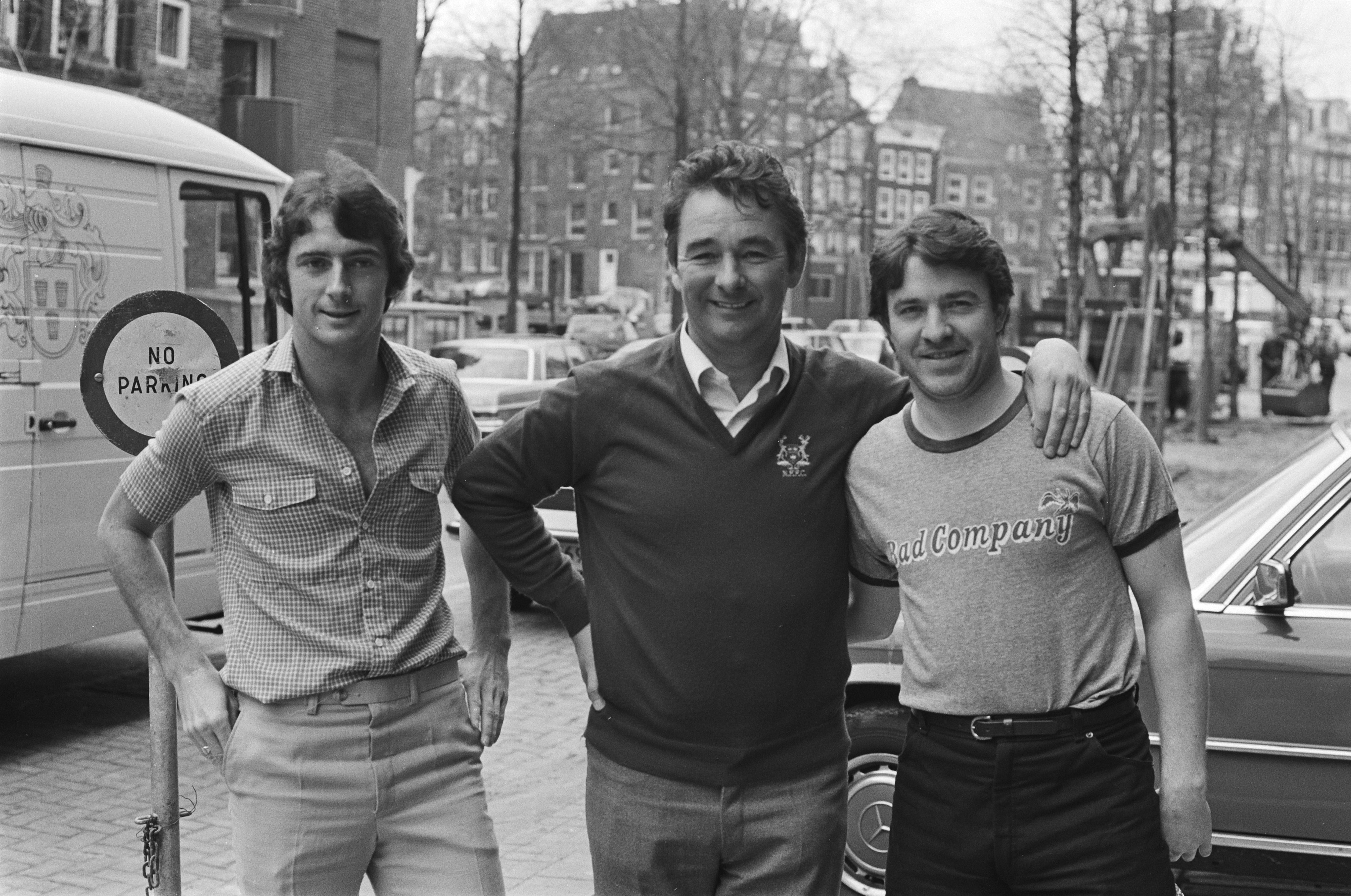
Brian Clough became Forest manager in January 1975 with the club in the Second Division. At that stage, nobody could have known quite what was coming.
Peter Taylor rejoined Clough in 1976, and promotion followed in 1977. Forest were back in the First Division — but simply staying there was never going to be enough. Within a year, the newly promoted side had done something extraordinary.
[heading]Did you know?[/heading]
Clough’s eventual record at Forest was enormous: 1,140 matches in charge, using 130 different players across his 18-year reign.

1977–78 — Champions of England
Forest won the First Division title in their first season back in the top flight.
They finished seven points clear of Liverpool under the two-points-for-a-win system, while also winning the League Cup. A promoted side had gone straight past the established powers and become champions of England.
It remains Forest’s only league championship — and the launchpad for what came next.
[heading]Did you know?[/heading]
Forest won the title immediately after promotion from the Second Division. They finished seven points ahead of Liverpool at a time when a victory was worth only two points.
1979 — Champions of Europe
Forest’s first European Cup campaign ended with the trophy.
They eliminated holders Liverpool early in the competition and reached the final against Malmö in Munich. Trevor Francis, signed during the season for a fee that made him Britain’s first £1 million footballer, scored the only goal with a header from John Robertson’s cross.
Forest were European champions just four years after Clough had arrived at a Second Division club.
[heading]Did you know?[/heading]
The final was Trevor Francis’s first European Cup appearance for Forest. His February transfer had made him ineligible for the earlier rounds, so his first match for the club in the competition ended with him scoring the winning goal in the final.
1980 — European Cup Retained
Winning Europe once was remarkable. Forest did it again the following season.
After surviving a difficult route that included Dynamo Berlin and Ajax, Forest met Hamburg in the final in Madrid. John Robertson scored the only goal as Forest won 1–0 and retained the European Cup.
Two successive European Cups put Forest into an extraordinarily small group of clubs — and created the two stars that still sit above the badge.
[heading]Did you know?[/heading]
Forest retained the European Cup without Trevor Francis, the man who had scored the winner in the previous year’s final. Francis missed the Hamburg game through injury, leaving Clough without one of his biggest attacking threats.

The Later Clough Years
Forest never repeated the heights of 1978–80, but the Clough era was far from finished.
The club remained a major cup force, particularly in the League Cup, and reached the FA Cup final in 1991 after beating West Ham 4–0 in the semi-final. That Wembley final, lost to Tottenham Hotspur, was the one major domestic trophy Clough never won with Forest.
By the time he retired in 1993, Clough had managed Forest for 18 years and more than 1,100 matches. An era that had transformed the club was finally over.
[heading]Did you know?[/heading]
Forest’s 1979 European Super Cup was actually played in 1980. Scheduling problems pushed the two legs against Barcelona into January and February, with Forest winning 2–1 on aggregate after Kenny Burns scored at the Camp Nou.
1990s — Pearce, Collymore and Europe Again
The post-Clough years were unstable, but they were not without memorable Forest sides.
Under Frank Clark, Forest returned immediately to the Premier League after relegation in 1993, then finished third in the top flight in 1994/95. With players including Stuart Pearce, Steve Stone and Stan Collymore, Forest were once again one of the strongest sides in England.
That run also brought European football back to the City Ground. Forest reached the UEFA Cup quarter-finals in 1995/96.
[heading]Did you know?[/heading]
The 1995/96 UEFA Cup run would be Forest’s last European campaign for 30 seasons.
1999–2008 — The Long Fall
Relegation from the Premier League in 1999 began a very different chapter.
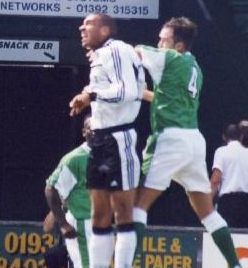
Forest spent years trying and failing to return, with financial problems and managerial changes adding to the instability. The low point came in 2005, when relegation sent the club into League One.
Three seasons followed in the third tier before promotion back to the Championship in 2008. For a club with two European Cups, the contrast could hardly have been greater.
[heading]Did you know?[/heading]
When Forest dropped into League One in 2005, they became the first former European Cup winners to fall into the third tier of their domestic league.
The Championship Years
Returning to the Championship did not bring a quick route back to the top flight.
Forest repeatedly threatened promotion, reached the play-offs and produced good teams, but the Premier League remained out of reach. Managers came and went, promising seasons faded, and the absence from the top division stretched past 10 years, then 15, then 20.
For a whole generation of supporters, Forest were no longer remembered as a Premier League club. They were a Championship club trying to become one again.
[heading]Did you know?[/heading]
The long exile produced some surreal contrasts. In 2005, a club with two European Cups was playing in the Football League Trophy and was knocked out 3–2 at Woking in its first appearance in the competition.
2021–22 — The Return
The 2021/22 season began badly enough that promotion looked absurd. Steve Cooper arrived in September and transformed the side.
Forest climbed rapidly, reached the play-offs and beat Sheffield United on penalties in a dramatic semi-final before facing Huddersfield Town at Wembley. A 1–0 victory ended the wait: after 23 years away, Nottingham Forest were back in the Premier League.
[heading]Did you know?[/heading]
Forest’s promotion season began with six defeats from their first seven league games. By the time Steve Cooper arrived in September, the idea of ending the season at Wembley looked almost ridiculous.
Premier League and Europe Again
Returning to the Premier League was only the first challenge. Forest had to rebuild rapidly and spent their first seasons back fighting to establish themselves at the highest level.
Then came a genuine step forward. The 2024/25 side produced Forest’s strongest top-flight season for decades, reached the FA Cup semi-final and secured a return to European competition for the first time in 30 seasons.
The club that had once won successive European Cups was finally heading back into continental football, giving a new generation the chance to experience European nights rather than simply hear stories about them.
[heading]Did you know?[/heading]
The 2024/25 season brought several landmarks at once: Forest secured European football for the first time in 30 seasons, achieved their highest league finish since 1994/95 and reached their first FA Cup semi-final since 1991. Matz Sels also became the first Forest goalkeeper to win the Premier League Golden Glove.