
Pyramid formation first used (1873*)
On this day in Nottingham Forest history in 1873* Sam Widdowson’s Forest began a tactical story linked to the 2-3-5 formation.
Nottingham Forest became part of one of football’s most important early tactical stories through their association with the 2-3-5 formation.
The system, later known as the Pyramid, used two full-backs, three half-backs and five forwards. It became the dominant shape in British football for many years, but its early development was not the work of one club alone. Cambridge University, Wrexham, Forest and others all appear in accounts of how the formation spread.
Forest’s link is usually connected with Sam Weller Widdowson, Forest’s captain and one of the club’s key early figures. He became a leading figure in the club’s early years, and later football-history writing has described Forest as enthusiastic early advocates of the system. Some accounts credit Widdowson with helping introduce a more organised shape at Forest during the 1870s.
This event should therefore be treated as tactical folklore rather than a clean invention claim. Forest were among the clubs associated with the early development and popularisation of the 2-3-5, but they should not be described as the sole inventors of the formation.
* Date note: 1 August 1873 is used as a cautious season-based placement for Widdowson’s early captaincy and tactical influence. Sources link Forest and Widdowson with the early 2-3-5 story, but no exact first-use match date has been found.
Sources
The Guardian; Jonathan Wilson tactical history; Football League 125 tactical history; Sam Weller Widdowson biographical sources
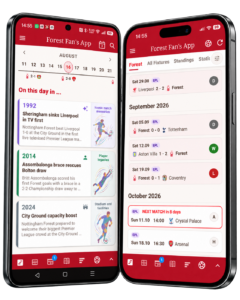


Forest timeline
Explore more Nottingham Forest history
Browse the timeline to discover more events from this day and beyond:
 0–2
0–2
 3–0
3–0
 1–1
1–1
 1–2
1–2
 4–1
4–1
 1–0
1–0
 1–0
2–1
1–0
2–1
 2–0
2–0
 0–1
0–1
 0–2
0–2
 2–2
0–0
2–2
0–0

 1–2
0–1
1–2
0–1

 14:00
16:30
14:00
16:30

 20:00
20:00
 15:00
17:30
15:00
17:30

 15:00
20:00
15:00
20:00

 20:00
15:00
20:00
15:00

 15:00
15:00
15:00
15:00

 16:30
16:30
 19:30
15:00
19:30
15:00
 19:30
15:00
15:00
15:00
15:00
20:00
15:00
15:00
20:00
15:00
15:00
15:00
15:00
15:00
15:00
15:00
15:00
15:00
16:00
19:30
15:00
15:00
15:00
15:00
20:00
15:00
15:00
20:00
15:00
15:00
15:00
15:00
15:00
15:00
15:00
15:00
15:00
16:00
Nottingham Forest became part of one of football’s most important early tactical stories through their association with the 2-3-5 formation. The system, later known…
Nottingham Forest’s old civic-style crest was part of the club’s pre-Tricky Tree visual identity, linking the badge directly to the city itself. Before the…